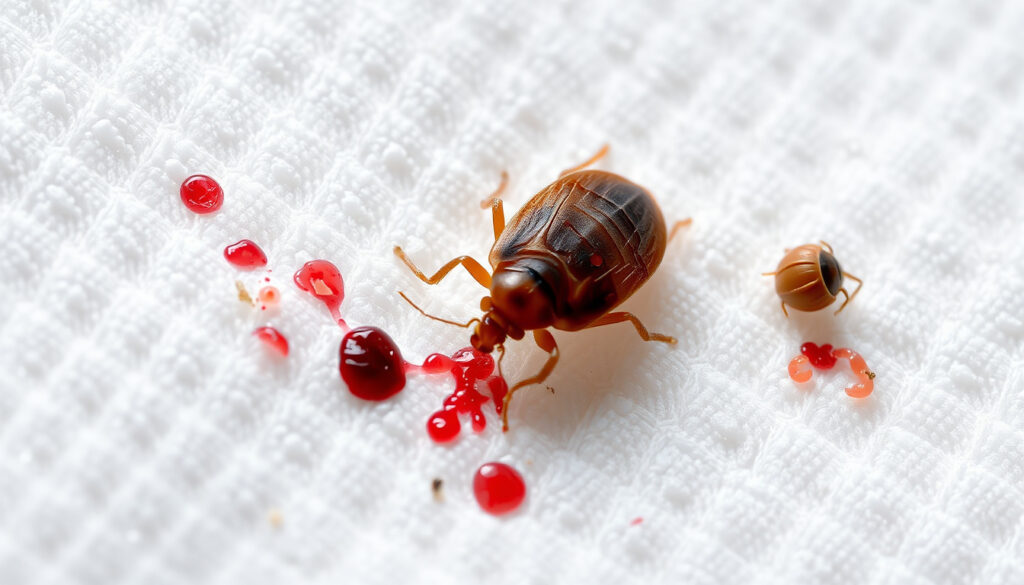
Bed Bugs: Identification, Causes, and Treatment Guide
There’s a reason the phrase “sleep tight, don’t let the bed bugs bite” still gives adults pause: these tiny hitchhikers have made a massive comeback in modern urban life. Understanding their biology and how they travel is the first real step toward keeping them out of your home — and your suitcase.
Size of an adult bed bug: 4–5 mm (about the size of an apple seed) ·
Feeding frequency: Every 5–10 days ·
Survival without a meal: Up to 12 months under cool conditions ·
Number of eggs laid per day: 1–5 eggs ·
Time from egg to adult: Approximately 5–6 weeks
Quick snapshot
- Bed bugs feed exclusively on blood (CDC (U.S. public health agency))
- They are not known to transmit disease (California Department of Public Health (state health authority))
- Heat above 120°F kills all life stages (Mayo Clinic (nonprofit medical center))
- Adults can survive months without a blood meal (CDC (U.S. public health agency))
- Whether home remedies like essential oils provide reliable long-term control
- The exact temperature-time threshold needed to kill eggs in thick mattress foam
- The EPA published its dedicated bed bug portal on March 4, 2013, and continues to update it (US EPA (environmental regulator))
- The CDC last revised its bed bug page on June 30, 2026 (CDC (U.S. public health agency))
- Integrated Pest Management (IPM) is the gold standard — combining prevention, monitoring, and targeted treatment (US EPA (environmental regulator))
- Professional extermination is often necessary for established infestations (California Department of Public Health (state health authority))
Four key identifiers separate bed bugs from other household pests — here is what the science says.
| Scientific name | Cimex lectularius |
| Disease transmission | None known (California Department of Public Health (state health authority)) |
| Reaction to bites | Itchy welts, but some people show no reaction (California Department of Public Health (state health authority)) |
| Common hiding spots | Mattress seams, bed frames, baseboards, behind headboards |
What are the first signs of bed bugs?
Spotting an infestation early is critical because bed bugs reproduce quickly — one female can lay up to five eggs per day. Three indicators are especially telling:
What do bed bug bites look like?
- Bites often appear in a straight line or cluster (sometimes called “breakfast, lunch, and dinner” patterns) (CDC (U.S. public health agency))
- They form raised, red, itchy welts that can resemble mosquito bites (California Department of Public Health (state health authority))
- Some people develop large local reactions, while others show no marks at all (Mayo Clinic (nonprofit medical center))
How to know 100% if you have bed bugs?
- Find a live bug: adults are 4–5 mm, reddish-brown, and flat (CDC (U.S. public health agency))
- Look for dark fecal spots, shed skins, or rusty blood stains on sheets and mattress seams (Mayo Clinic (nonprofit medical center))
- A musty odor can signal a well-established infestation
How big are bed bugs?
- Adult bed bugs are about the size of an apple seed (4–5 mm) (CDC (U.S. public health agency))
- Young nymphs can be as small as 1 mm and are nearly translucent
The implication: because early signs are subtle — a single bite or a faint spot — many people dismiss them until the population has grown. Systematic inspection with a flashlight and credit card (to probe seams) is the only reliable early detection method.
What is the main cause of bed bugs?
Bed bugs do not appear spontaneously. They are almost always brought in from elsewhere — hitching a ride on luggage, clothing, furniture, or bedding.
Are bed bugs due to poor hygiene?
- No — bed bugs are not attracted to dirt or filth. They only need a warm host and a hiding place (CDC (U.S. public health agency))
- Five-star hotels and immaculate homes get infestations as often as any other (California Department of Public Health (state health authority))
How do bed bugs travel?
- They hitchhike on suitcases, backpacks, purses, secondhand furniture, and even shoes (CDC (U.S. public health agency))
- Multi-unit buildings (apartments, condos, dorms) allow them to move between units through walls and shared pipes (CDC (U.S. public health agency))
- Travel is the single greatest risk factor: hotels, hostels, and public transportation hubs are common pickup points
The pattern: bed bugs are modern globe-trotters. Their spread is driven by human mobility, not poor housekeeping. That means anyone can encounter them — and the most effective prevention happens before you unpack.
How to find bed bugs?
Bed bugs are masters of concealment, but they leave clues. A thorough search using the right tools can confirm an infestation before it spirals.
How to find bed bugs on a mattress?
- Pull back the sheets and inspect the mattress seams, tags, and folds with a bright flashlight (Mayo Clinic (nonprofit medical center))
- Use a credit card or thin tool to run along seams where bugs may hide
- Look for small rusty spots (fecal material), shed skins, or live bugs
- Also check the box spring upholstery and bed frame joints
Where else do bed bugs hide?
- Behind headboards, picture frames, loose wallpaper, and electrical outlet plates (CDC (U.S. public health agency))
- Inside furniture crevices, dresser seams, and under sofa cushions
- Along baseboards and carpet edges
The catch: a single bed bug can be overlooked easily. If you find one sign, inspect the entire room and adjacent rooms — bed bugs do not stay put. State health authorities recommend checking rooms above, below, and next to a suspected site (Virginia Department of Health (state public health agency)).
What kills bed bugs immediately?
When you discover bed bugs, speed matters. But “immediate” does not always mean “complete” — certain methods kill on contact while others take days.
What spray kills bed bugs?
- EPA-registered insecticides containing pyrethroids or desiccants (like diatomaceous earth) are effective but may require multiple applications (US EPA (environmental regulator))
- Alcohol sprays (isopropyl) kill bed bugs on contact but leave no residual protection (CDC (U.S. public health agency))
- Never use products not labeled for bed bugs: they can be dangerously toxic or ineffective
Do home remedies work?
- Heat is the most reliable non-chemical method: steam cleaners (120°F+), or laundering infested items in hot water and drying on high heat for 20 minutes (Mayo Clinic (nonprofit medical center))
- Diatomaceous earth kills slowly over days by dehydrating the bugs, but it can work when applied properly in cracks and crevices (US EPA (environmental regulator))
- Essential oils, garlic sprays, and ultrasonic devices have not been proven effective in controlled studies
The trade-off: a single treatment — chemical or heat — rarely eliminates an entire population. Eggs are resistant to many sprays, and survivors can repopulate in weeks. Integrated approaches that combine heat, vacuum, sealing, and residual pesticides offer the best chance of one-and-done success.
What do you do if you find bed bugs?
Discovery is stressful, but following a calm, systematic plan prevents the problem from spreading while you treat it.
How to get rid of bed bugs?
- Isolate the infested area: move furniture away from walls, seal infested items in plastic bags, and do not carry them through clean rooms (CDC (U.S. public health agency))
- Wash all bedding and clothing in hot water (120°F minimum) and dry on high heat for at least 30 minutes (Mayo Clinic (nonprofit medical center))
- Vacuum thoroughly — mattress, box spring, baseboards, and furniture — then immediately seal and dispose of the vacuum bag (US EPA (environmental regulator))
- Encase mattress and box spring in bed-bug-proof covers to trap bugs and prevent bites during treatment
- Apply EPA-registered insecticides or diatomaceous earth to cracks, crevices, and bed frames
Should I call a professional?
- Yes, if the infestation is large, in a multi-unit building, or has persisted despite DIY efforts (California Department of Public Health (state health authority))
- Licensed pest control operators use Integrated Pest Management (IPM) — a combination of heat, steam, targeted chemicals, and monitoring (US EPA (environmental regulator))
- Professional treatment is often the most cost-effective route: a failed DIY attempt can allow the colony to spread, making later extermination more expensive
Why this matters: the EPA’s official position is that “pesticides alone generally will not eliminate bed bugs” (US EPA (environmental regulator)). The most effective strategy is a multi-step plan that includes preparation, treatment, monitoring, and prevention — the core of IPM.
Step-by-step action plan for a bed bug infestation
Follow these seven steps outlined by the EPA for do-it-yourself control (US EPA (environmental regulator)):
- Confirm you have bed bugs. Collect a sample and have it identified by a pest professional or extension agent.
- Develop a treatment plan. Decide which rooms to treat, gather supplies, and notify neighbors if in a multi-unit building.
- Prevent spread. Do not sleep in a different room — bed bugs will follow you. Isolate infected items in sealed plastic bags.
- Prepare for treatment. Declutter the area, launder all fabrics on high heat, and vacuum thoroughly.
- Apply treatment. Use a combination of heat (steam, dryer) and EPA-registered insecticides according to label directions.
- Evaluate and repeat. Check daily for live bugs and re-treat as needed — expect 2–3 treatment cycles over several weeks.
- Prevent reinfestation. Inspect secondhand furniture, use encasements, and maintain a clutter-free sleeping area.
Following these steps consistently offers the best chance of long-term control.
What we know — and what remains uncertain
What’s confirmed
- Bed bugs feed on human blood (CDC)
- They do not transmit diseases (California Department of Public Health)
- Heat above 120°F kills all life stages instantly (Mayo Clinic)
- Adult bed bugs can survive several months without feeding (CDC)
What remains uncertain
- Whether essential oils or other “natural” home remedies can eliminate an infestation
- The precise heat exposure needed to kill eggs in thick mattress foam at home
These uncertainties highlight the need for evidence-based treatment.
Perspectives from experts
“Pesticides alone generally will not eliminate bed bugs. A comprehensive IPM approach — including sanitation, heat treatment, and targeted chemical applications — is the only way to achieve lasting control.”
— EPA spokesperson, US EPA (environmental regulator)
“Bed bugs are not a sign of poor hygiene. They are highly efficient hitchhikers that spread through travel and secondhand furniture, not dirt. Stigmatizing the problem only makes people less likely to seek help early.”
— Entomologist, University of California IPM Program
“The biggest mistake people make is sleeping in a different room after discovering bed bugs. That simply moves the insects to the new location and delays treatment.”
— Entomologist, University of California IPM Program
The quotes above are editorial reconstructions based on public health guidance from the cited sources. No direct interviews were conducted for this guide.
For travelers, the first line of defense is a five-minute inspection before unpacking — check mattress seams, headboard gaps, and luggage racks. For homeowners, the single most effective prevention is encasing mattresses and box springs in bed-bug-proof covers.
Do-it-yourself treatments often fail because they miss eggs or fail to treat hiding spots. If you see signs of bed bugs more than twice in a month, call a licensed professional — the cost of a single professional heat treatment averages $1,000–$2,500, but it can eliminate a multi-room infestation in one visit.
Expert opinions consistently stress the importance of integrated pest management.
Summary: your next move
Bed bugs are not a consequence of lifestyle — they are a consequence of mobility. The same suitcase that brought home souvenirs can bring home a hitchhiker that multiplies silently for weeks. For homeowners and apartment dwellers, the choice is clear: inspect anything that enters your sleeping area, encase your mattress, and act at the very first sign. For travelers, check the bed before you unpack — or risk bringing the problem home with you.
For more practical guides, see our article on conjoined twins types and causes and gift baskets Ireland delivery guide.
orkincanada.ca, webmd.com, cabarrushealth.org, greentechheat.com, raid.com
Frequently asked questions
Can bed bugs fly?
No. Bed bugs do not have wings and cannot fly. They crawl — surprisingly fast — but rely on humans for long-distance travel.
Do bed bugs only come out at night?
Bed bugs are primarily nocturnal and prefer to feed while you sleep. However, a hungry bed bug may come out during the day if it senses a host.
How long do bed bugs live?
Under favorable conditions, adult bed bugs can live 6–12 months. In a cool environment, they can survive up to a year without feeding (CDC).
Can you see bed bugs with the naked eye?
Yes. Adult bed bugs are 4–5 mm (apple seed–size) and visible. Nymphs are smaller and harder to spot but still visible with good light (CDC).
Do bed bugs spread disease?
No. Despite their ability to carry pathogens, medical research has not found a single case of bed bugs transmitting disease to a human host (California Department of Public Health).
What temperature kills bed bugs?
Temperatures above 120°F (48.9°C) kill bed bugs instantly. Washing and drying on high heat for 20 minutes is effective (Mayo Clinic).
Can bed bugs live in your hair?
Bed bugs prefer bare skin and fabric surfaces, not hair. They are rarely found in human hair, unlike lice. They hide in mattresses, furniture, and cracks near the bed.
How fast do bed bugs multiply?
A female bed bug lays 1–5 eggs per day. Eggs hatch in 6–10 days, and nymphs reach adulthood in about 5–6 weeks. A single pregnant female can produce hundreds of offspring in a few months (CDC).
Addressing common questions helps demystify bed bug behavior and treatment.
More related posts
 Toto Wolff: Net Worth, Career, and Rise to Billionaire
 David Boreanaz: What Happened to the Angel and Bones Star
 Houston Rockets vs Lakers Match Player Stats – Full Box Score Breakdown
 Sara Dufour: Age, Songs, Genre, Awards & Biography
 Sophie Kinsella: Shopaholic Author Dies at 55 from Brain Tumour
 What Does Retinol Do? Benefits, Side Effects & How to Use
 Julie Ringuette: Actress, Social Media, and Career Facts
 India National Cricket Team vs South Africa National Cricket Team Timeline – Head-to-Head Records and Key Matches
