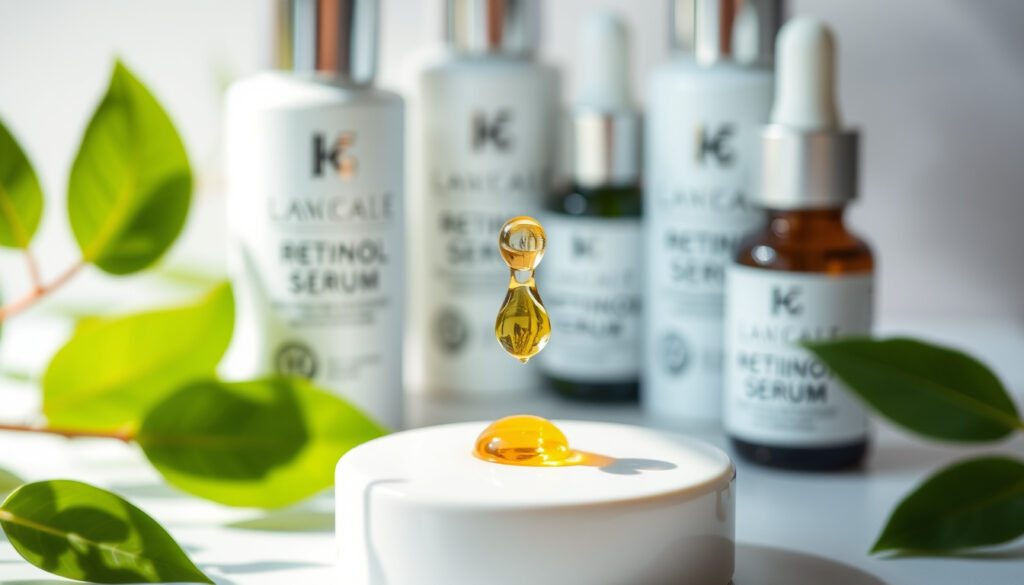
What Does Retinol Do? Benefits, Side Effects & How to Use
You’ve probably heard that retinol is the gold standard for youthful skin, but between the glowing before-and-after photos and the warnings about peeling and redness, it’s easy to feel confused. The truth is, retinol is a vitamin A derivative that accelerates cell turnover and stimulates collagen production, and this guide separates the clinical evidence from the hype so you can decide how — and when — to add retinol to your routine.
Known for: Stimulating collagen production and cell turnover (Cleveland Clinic) ·
Use frequency: Start with 2-3 times per week (Cleveland Clinic) ·
Peak efficacy: Visible results after 8-12 weeks (Healthline)
Quick snapshot
- Retinol boosts collagen and speeds cell turnover (Cleveland Clinic)
- Reduces fine lines, wrinkles, and acne (Healthline)
- Optimal frequency for every skin type is not universally defined (Cleveland Clinic)
- Long-term effects of high-concentration OTC retinol are not well studied (Cleveland Clinic)
- Full benefits visible after 8-12 weeks of consistent use (Healthline)
- Gradually increase frequency as skin builds tolerance (Cleveland Clinic)
Four key facts that define retinol’s role in skincare:
| Fact | Value |
|---|---|
| Active Ingredient | Retinol (Vitamin A derivative) |
| Common Strength Range | 0.25% to 1% (OTC) |
| Full Results Visible After | 8-12 weeks |
| Skin Concerns Targeted | Acne, wrinkles, uneven tone, sun damage |
What does retinol do to my face?
When applied to the skin, retinol triggers changes that go deeper than surface level.
How does retinol improve skin texture?
- Retinol increases skin cell production, unclogging pores and smoothing rough patches (Cleveland Clinic).
- Boosts collagen synthesis, reducing the appearance of fine lines and wrinkles (Healthline).
- Exfoliates the skin, improving uneven tone and pigmentation (Skin Beauty).
What does retinol do for acne?
- Retinol normalizes cell turnover, preventing pores from becoming clogged (Healthline).
- It can cause an initial “purge” of breakouts before improvement (Skin Beauty).
Collagen boost is the headline, but cell turnover is the engine. Without consistent turnover, retinol’s effects stall.
The implication: retinol’s effects are well-documented, but patience is required.
Is it okay to use retinol everyday?
How often should you use retinol for best results?
- Beginners should apply retinol every other day, starting with a low concentration (Cleveland Clinic).
- Gradually increase frequency to nightly as tolerance builds, typically after 4-6 weeks (Healthline).
What are the signs of overusing retinol?
- Redness, peeling, itching, and excessive dryness (Cleveland Clinic).
- Increased sensitivity to sunlight (Healthline).
- Overuse may thin the skin and worsen wrinkles (Skin Beauty).
Pushing for daily use too quickly can backfire. Irritated skin produces inflammation that accelerates aging, the opposite of what retinol aims to achieve.
The implication: consistency matters more than frequency. Using retinol every other day correctly beats applying it nightly with irritation.
What are the disadvantages of retinol?
Common side effects and how to manage them
- Dryness, peeling, redness, and itching are normal in the first weeks (Cleveland Clinic).
- Apply moisturizer before or after retinol (the “sandwich” method) to buffer (Cleveland Clinic).
- Always use SPF 30+ daily, as retinol increases sun sensitivity (Healthline).
- Some research suggests high doses of retinol may be associated with increased skin cancer risk, but evidence is not conclusive (Cleveland Clinic).
Who should avoid retinol?
- Pregnant or breastfeeding women should not use retinol (Healthline).
- People with very sensitive skin, eczema, or rosacea may need to avoid or use lower strengths (Derm Chicago).
Upsides
- Proven to reduce fine lines and wrinkles
- Effective against acne
- Improves skin texture and tone
Downsides
- Initial irritation and purging
- Requires consistent sun protection
- Not safe during pregnancy
Why this matters: Retinol’s downsides are manageable for most, but for those with sensitive skin or pregnancy considerations, alternatives may be better.
Retinal vs Retinol: Which Is Better For Your Skin?
How retinal differs from retinol
- Retinal (retinaldehyde) is one conversion step closer to retinoic acid than retinol, making it more potent (Good Housekeeping).
- Both are available over the counter, unlike prescription tretinoin (Good Housekeeping).
What works 11 times faster than retinol?
- Some brands claim retinal works up to 11 times faster than retinol, though the evidence is limited to manufacturer data (Medik8).
- Retinal also has direct antibacterial benefits for acne-prone skin (Medik8).
Six differences between retinal and retinol, one pattern: retinal is stronger but retinol is gentler for beginners.
| Feature | Retinol | Retinal |
|---|---|---|
| Conversion steps to retinoic acid | 2 steps | 1 step |
| Relative potency | Milder | More potent |
| Typical irritation | Low to moderate | Moderate, but often better tolerated than expected |
| Speed of results | 8-12 weeks | Faster (claimed 11x) |
| Best for | Beginners, sensitive skin | Experienced users, acne-prone skin |
| Availability | Widely available OTC | Increasingly available OTC |
The catch: faster results from retinal come with a higher risk of irritation. For most beginners, retinol is the safer starting point.
What Percentage of Retinol Is Effective?
What is a safe starting concentration?
- Over-the-counter retinol ranges from 0.25% to 1% (Healthline).
- Beginners should start at 0.25% or 0.5% and work up (Cleveland Clinic).
Is 2.5% retinol too strong?
- 2.5% retinol is very high and typically only available by prescription; it can cause severe irritation (Skin Beauty).
What this means: More is not better. The right percentage depends on your skin’s tolerance, not the marketing label.
How to Start Using Retinol: A Step-by-Step Guide
- Start with a low concentration (0.25%-0.5%) retinol product. You can find beginner-friendly retinol serums at The Cosmetics Company Store and local Beauty Supply Near Me.
- Apply to clean, dry skin at night, after waiting 30 minutes after washing (Cleveland Clinic).
- Use only 2-3 times per week initially.
- Apply moisturizer before or after to buffer irritation.
- Always use SPF 30+ during the day (Healthline).
- After 4-6 weeks, increase frequency to every other night, then nightly if tolerated.
- Avoid other actives (like AHAs, BHAs, vitamin C) in the same routine initially.
The pattern: building tolerance slowly is the key to long-term success.
What’s Confirmed and What’s Still Unclear
Confirmed facts
- Retinol boosts collagen production and cell turnover (Cleveland Clinic)
- Retinol reduces fine lines, wrinkles, and acne (Healthline)
- Higher strengths cause more irritation (Skin Beauty)
What’s unclear
- Optimal frequency for every skin type is not universally defined (Cleveland Clinic)
- Long-term effects of high-concentration over-the-counter retinol are not well studied (Cleveland Clinic)
- The cancer risk from high-dose OTC retinol remains unconfirmed (Cleveland Clinic)
“Retinol increases skin cell production and unclogs pores.”
– Cleveland Clinic dermatology expert (Cleveland Clinic)
“Retinol increases skin sensitivity to sun, requiring daily SPF 30+ use.”
– Healthline medical review (Healthline)
For anyone starting retinol, the choice is clear: begin with a low concentration, use it sparingly, and commit to sun protection. The alternative is wasted time and irritated skin that may set back your skincare journey.
skin-beauty.com, medik8.com, goodhousekeeping.com, lemon8-app.com, dermchicago.com, skinshop.ie
For a detailed breakdown of how retinol works and what to expect, see this guide on retinol benefits and side effects.
Frequently asked questions
Can retinol be used with vitamin C?
Yes, but it’s best to use vitamin C in the morning and retinol at night to avoid irritation. Some formulations are designed to be used together, but separate routines reduce the risk of over-sensitizing the skin (Healthline).
Should you apply retinol before or after moisturizer?
Both approaches work. The “sandwich method” — moisturizer, then retinol, then moisturizer again — can buffer irritation for beginners. Applying retinol directly to clean skin is fine once tolerance is built (Cleveland Clinic).
Does retinol cause wrinkles if you stop using it?
No. When you stop retinol, your skin returns to its natural aging process. The improvements in collagen and cell turnover gradually reverse, but no rebound wrinkling occurs (Healthline).
Can retinol be used on the body?
Yes, retinol can be applied to the chest, hands, and other areas prone to sun damage. Use a lower concentration and moisturize well, as body skin may be less tolerant (Cleveland Clinic).
What is the best retinol concentration for sensitive skin?
Sensitive skin should start at 0.25% or lower. Many brands offer “sensitive” formulas with encapsulated retinol that releases gradually to reduce irritation (Derm Chicago).
How long does retinol take to work?
Texture improvements can appear after 4 weeks, but anti-aging benefits like wrinkle reduction typically require 8-12 weeks of consistent use. Acne results may take 12-16 weeks (Healthline).
More related posts
 Dept Q Season 2: Renewal, Cast, and Release Date News
 Rachel Homan: Children, Olympics 2026 & Team Changes
 Tiffin Service Near Me: Pricing, Menu & Options in Ireland
 Bloodstained: Ritual of the Night – Worth It, PS5 & More
 Jennifer Landon: Age, Husband, and Yellowstone’s Teeter Accent
 Bangladesh vs Netherlands Match Scorecard – T20I 2025
 Mark Zuckerberg Biography: Net Worth, 80% Rule & Family
 Woody Harrelson Movies and TV Shows: Full List & Guide
